

Hair shedding is a normal part of the physiological hair cycle. On average, a healthy adult loses between 50 and 100 hairs per day 1,2. Under normal conditions, these hairs are replaced by new growth, ensuring no visible loss of scalp density 2. However, when you notice an abnormal increase in hair loss or a significant slowdown in hair growth, this could be a sign of Androgenetic Alopecia (AGA). AGA is a genetically predetermined disorder caused by an excessive response to androgens, affecting up to 50% of adults 1.

Healthline
ANDROGENETIC ALOPECIA
16 October 2026
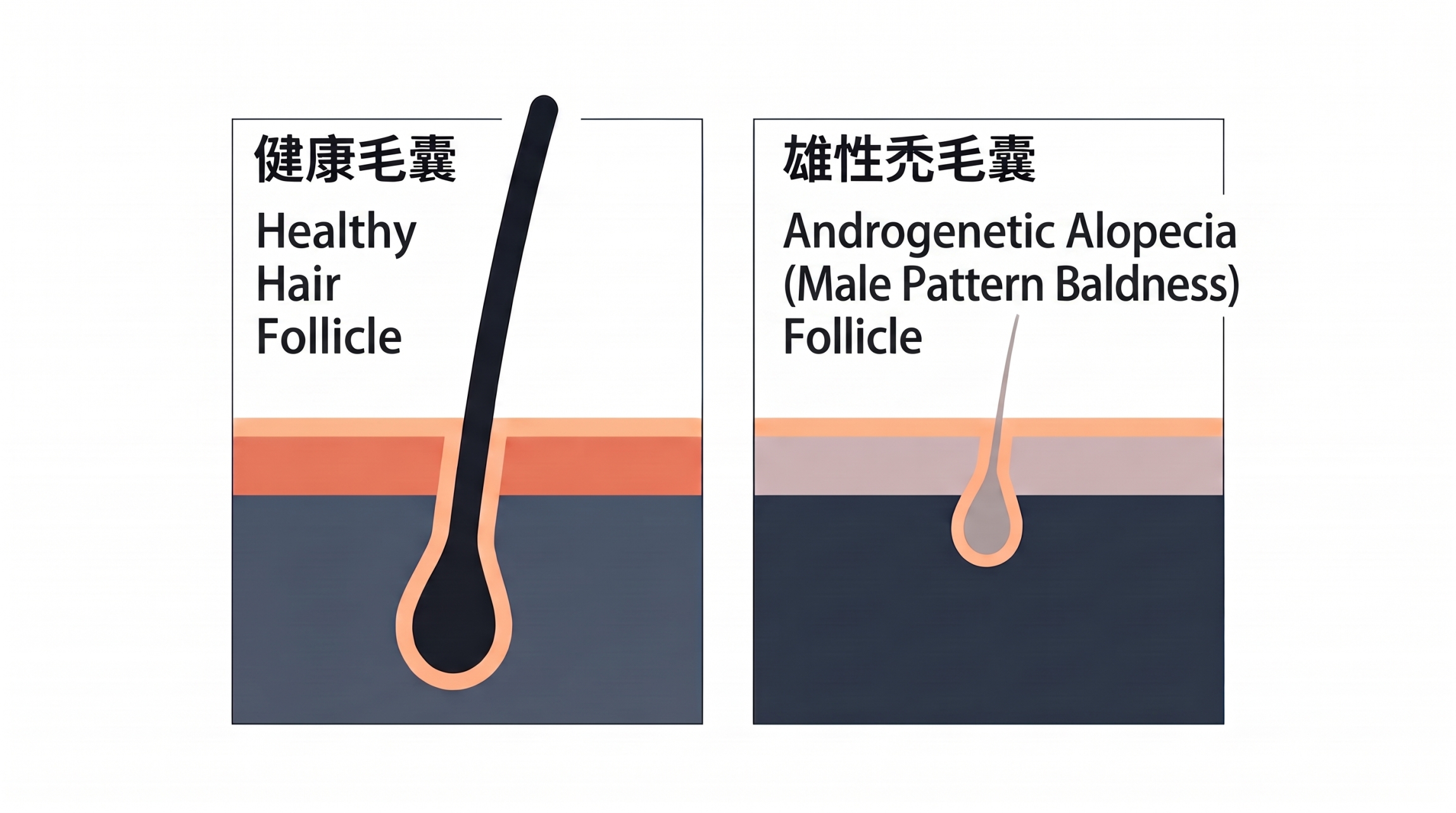
- Hair Follicle Miniaturization Comparison
-
- Healthy Follicle: Rooted deep in the dermis; supports thick, pigmented terminal hair.
- AGA Follicle: The follicle becomes shallow and shrunken, producing hair so fine it may not even penetrate the skin surface 1.
- Causes & The DHT Mechanism
-
The onset of AGA is primarily influenced by genetic factors 1
- The key enzyme: The enzyme 5-alpha reductase is the primary catalyst 1–3.
- DHT Conversion: 5-alpha reductase converts testosterone into Dihydrotestosterone (DHT), which has a significantly higher affinity for androgen receptors in the scalp 1.
- Growth Phase Shortening: When DHT binds to androgen receptors on hair follicles, it triggers follicular miniaturization, which shortens the growth phase and lengthens the resting phase, causing the follicles to prematurely degenerate and shed before they can produce thick, terminal hairs 1,4,5.
- Imbalanced Ratio of growth-to-resting phase for hair follicles: In a healthy scalp, the growth-to-resting ratio is 12:1. In AGA, this drops significantly to a ratio as low as 5:1. This means significantly more hair follicles are stuck in "pause mode" instead of growing new hair, which gradually reduce hair density over time 1.
- Gender-Specific Hair Loss Patterns
-
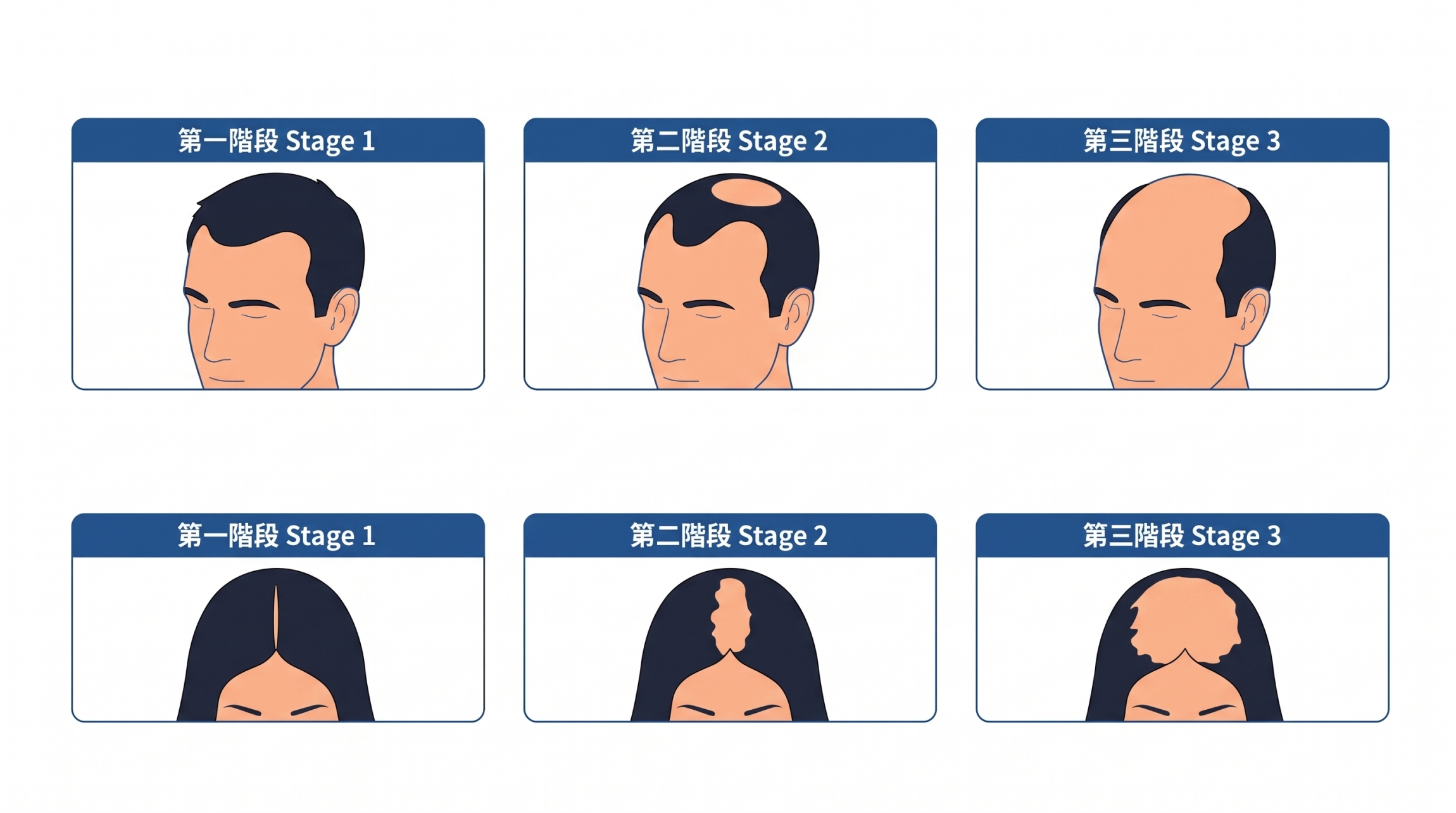
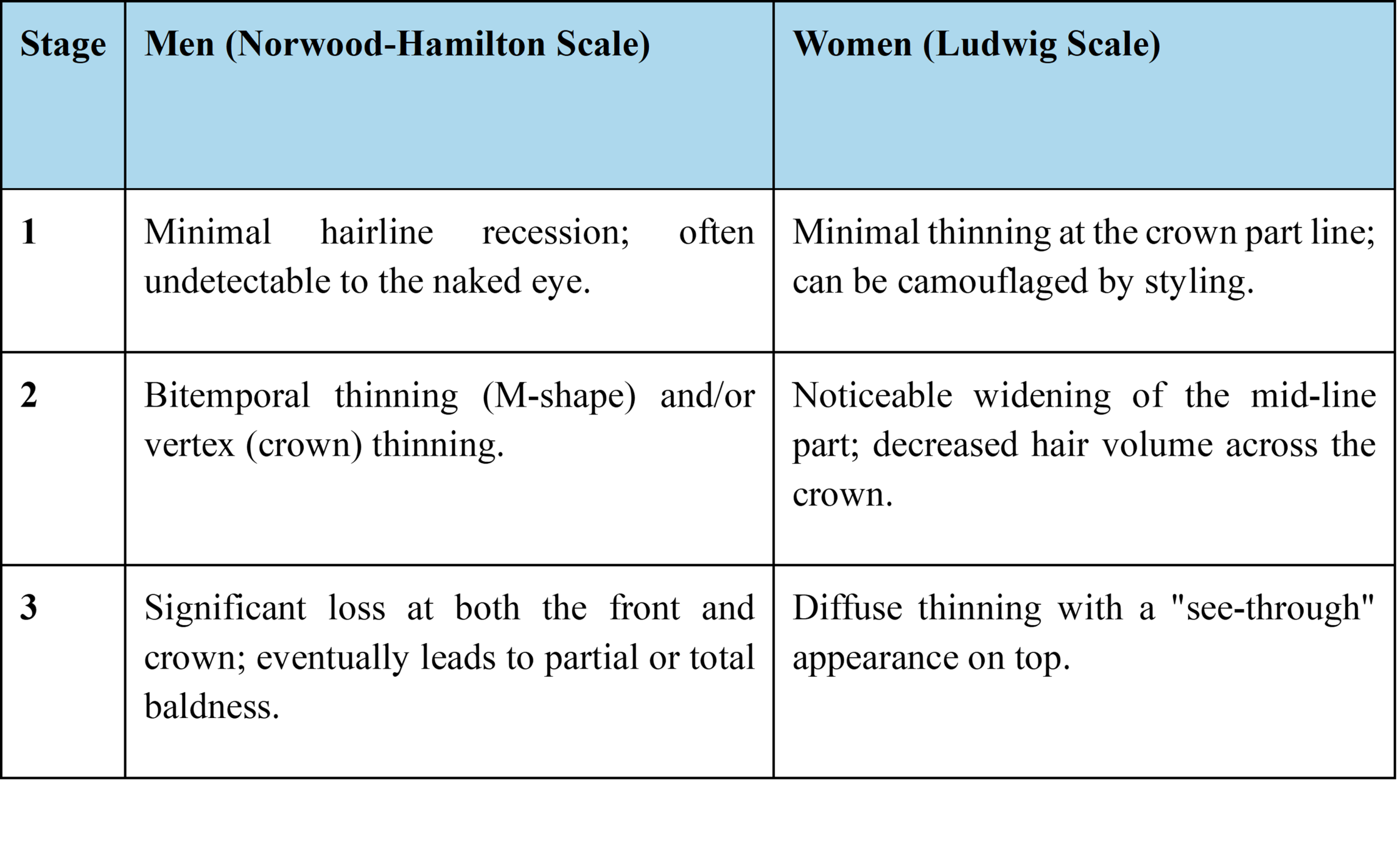
AGA manifests differently in men and women. Clinicians use respective standardized scales to track these progressions 1,4.
Hair Loss Progression Chart 1,4
- Medically-Proved Topical Treatment: Minoxidil Bailleul
-
Minoxidil (e.g. Minoxidil Bailleul) is an FDA-approved topical treatment for hair stimulation 1,3,4. This medication is sold by pharmacies under the supervision of a pharmacist.
- Minoxidil Bailleul
- Formulations: Available in 2% (men/women) and 5% (typically men; 5% can cause excess facial hair in women) 3,5. It can dilate blood vessels, increasing the supply of blood, oxygen, and nutrients to hair follicles 1,3.
- Initial Shedding: A transient increase in hair fall may occur in short period of time after initial application as follicles are expelling old hairs to shift from the resting phase into a new growth phase 1,5.
- Visible results typically require around 3 to 4 months of consistent use 5.
- Once treatment is discontinued, the effects of the medication will disappear within 3 to 4 months, and the hair loss process will revert to its pre-treatment state. 2,3,5.
- Unique formula provides a lighter, non-greasy texture 6.
- Made in France.
Product Application Instructions 5
- Dry Scalp Only: Use only on a completely dry scalp and hair.
- Precise Dosing: Apply a 1ml dose twice daily; do not exceed 2ml per day regardless of the area size.
- Application Technique: Apply to the center of the affected area and spread outward with fingertips.
- Reminder: Wash hands immediately after use; do not shampoo for at least 4 hours post-application.
- Disclaimer
-
The content on this site is not intended to be a substitute for professional medical advice, diagnosis, or treatment. Always seek the advice of your physician or pharmacist with any questions you may have regarding a medical condition.
- References
-
- Ho CH, Sood T, Zito PM. Androgenetic Alopecia. StatPearls/NCBI.
- HKSAR Government: Drug Office. 治療脫髮藥物 (Drugs for Treatment of Hair Loss).
- Nestor MS, et al. Treatment options for androgenetic alopecia: Efficacy, side effects, compliance, financial considerations, and ethics. Journal of Cosmetic Dermatology.
- Harvard Health. Treating Female Pattern Hair Loss.
- Minoxidil Bailleul 2% / 5% Package Inserts.
- Internal Data on file, 2023.


